Showing posts with label Exercise. Show all posts

Tuesday, July 27, 2021

Forget 10,000 steps — here's how much you should actually walk per day, according to science

 Website content extracted from: Forget 10,000 Steps — Here's How Much You Should Walk a Day: Research (insider.com)


  • Walking can help reduce your risk of illness and improve mental and physical health. 
  • But it's an old marketing myth that the optimal number is 10,000 steps a day.
  • For health, researchers found 7,000 to 8,000 daily steps was beneficial.
  • Visit Insider's homepage for more stories.
  • Despite the recommendations of pedometers everywhere, there's nothing scientific to the goal of walking 10,000 steps a day, for health or for weight loss. 

    That magic number is an arbitrary one that originated as an advertising campaign decades ago.

    While walking is great for your health, research suggests 7,000 to 8,000 steps might be a better goal.

    10,000 steps a day started as a marketing slogan

    The idea that walking 10,000 steps is optimal came from a catchy ad in Japanese, according to Daniel Lieberman, a Harvard paleoanthropologist who has studied the evolution of exercise.

  • Lieberman wrote in his recent book, "Exercised," that the Manpo-kei (translated as 10,000-step meter) was invented in the 1960s by the Japanese company Yamasa Tokei — the producer of the first commercial pedometer — which chose the name because it sounded good.

    And it worked.

    The company sold its product, and the concept became popularized all over the world as a metric for health.

    Walking is great for your health, but you don't need to hit a certain target to see benefits

    Lieberman told Insider there were some perks to getting 10,000 steps a day.

  • It's a convenient number for people to remember, walking that much (about 5 miles a day) is linked to health benefits, and walking is an accessible activity for many.

    "We all have deep fundamental instincts to avoid unnecessary activity, so we need those nudges to help people get started," Lieberman said.

    But it's not necessary hit 10,000 steps a day, research shows, and the health perks of walking may be on a spectrum.

    A 2019 study on older women found that those who walked 4,400 steps a day had lower mortality rates over four years of follow-up than those who walked the least (about 2,700 steps a day or fewer).

  • But the reduction in risk appeared to max out at about 7,500 steps a day, and researchers found no additional benefits to walking 10,000 or more daily steps.

    Similarly, a 2020 study found that taking 8,000 to 12,000 steps a day was linked to lower risk of dying of any cause during the study, compared with 4,000 steps a day. 

    Together, these studies suggest that moving more can benefit your health, whether or not you hit the magic number. 

    Some evidence suggests walking doesn't lead to significant weight loss long term

    There's some evidence that people who walk 10,000 steps a day are more likely to lose weight than those who walk just 3,500 steps daily. It seems to make intuitive sense that adding a few extra miles to your routine would help, thanks to the extra calories you're burning.

  • But new research suggests that may not be the case.

    Herman Pontzer, an evolutionary biologist, collected data showing that traditional hunter-gatherers, who walk miles each day, burn nearly the same number of calories as sedentary Americans. 

    His theory to explain this is that, over time, the body compensates for extra energy you burn through exercise by budgeting more carefully or increasing your hunger signals so you eat more to make up for it. 

    While this theory is somewhat controversial and requires more research, it suggests the relationship between walking and weight loss isn't as straightforward as people may think. So walking 10,000 steps a day isn't a hard and fast rule for shedding pounds any more than it's a prescription for better health. 

  • If you are looking to lose weight, there's no harm in walking, but changing your diet is key — and evidence suggests combing those measures leads to the best results.

The Good (and Not So Good) Effects of Sweat on Your Skin

 Website content extracted from: The Good (and Not So Good) Effects of Sweat on Your Skin - stack

By Published On: 2021-06-16

Walk down the cosmetic and facial care aisle of any retail store and you’ll be bombarded with messages telling you that sweat, oil, and pH factor are enemies of your skin. But sweat is essential to your body’s ability to regulate core temperature and purge the skin of harmful substances. If you’re not sweating, you’re not working out.

If you understand the pros and cons of sweat, you’ll have a better idea of what’s best for your skin. Here’s a primer, along with some tips.

The Good

  • Sweating is a signal during exercise that the warm-up phase is over and you are entering the performance zone. Once you are in the performance zone, sweat regulates your body temperature and signals your body’s ability to hydrate.
  • Sweat is good for the skin. Water hydrates, minerals, and salt naturally exfoliate, and urea and uric acid combat dry skin and dermatitis.
  • Sweating purges the skin of bacteria, dirt, oils, and impurities. The optimal pH factor for the skin is the same as the pH factor of sweat.

The Bad

  • The impurities that sweating helps flush out can stay on your skin. When the skin begins to re-absorb them, pH factors change and can lead to irritation and rash.
  • The sweat expelled through the apocrine glands in the skin is responsible for that familiar post-workout body odor.

Tips for Great Skin

By following five simple practices, athletes can capture all the benefits of sweating and avoid the potential for breakouts, rashes, and irritation:

  • Hydrate during a workout. The higher the water content in perspiration, the lower the chance of skin irritation. Water adds minerals, acids, and proteins to sweat, reducing the skin’s pH imbalance.
  • Wash your face before you work out. That will help reduce impurities on your skin as you work out. If you are outdoors, apply sunscreen with an SPF of 45 or higher.
  • Wear moisture-wicking workout clothing. Wicking moisture away from the skin reduces chafing and discomfort. Some brands even offer anti-microbial fabrics, which help reduce bacteria-induced rashes and irritation.
  • Shower and cleanse shortly after your workout. It’s important to reduce the amount of impurities that could be reabsorbed by the skin. Focus on parts of your body where sweat accumulates (e.g., under your arms and between your toes), not just your face. Use natural products and exfoliate dead skin with a loofah sponge or a natural bristle brush.
  • Use a pH-balanced antiperspirant, lotion and/or moisturizer after you shower. This will help restore the pH balance to your skin. Showering alters the skin’s natural pH balance, and soap removes essential moisture and oils. A pH-balanced deodorant or lotion helps restore it.

Monday, March 1, 2021

Dou Yin Videos


Tummy exercise


Bust exercise 


Flabby arms exercise 


Night exercise 


Morning exercise 

Saturday, August 29, 2020

6 Exercises That Will Transform Your Body in 30 Days

Website content extracted from: https://brightside.me/inspiration-health/6-exercises-that-will-transform-your-body-in-30-days-727460/?fbclid=IwAR3pI06zETfLnCevCSfI6Ud-BahjvLXUfmrEqW_SMBlS2TI1i3Vf34oZMXs

Our body is our sole possession that stays with us from birth right until our last breath, so it’s only fair that we take good care of it by strengthening and toning it, to have it working like a well-oiled machine. Below you will find 6 exercises that you can do for 30 days, to work your abs, strengthen your glutes, and boost your core. Follow this routine and watch your body transform before your eyes.
Bright Side guides you through the basic moves of these exercises so you can say hello to a stronger, fitter you in a month.

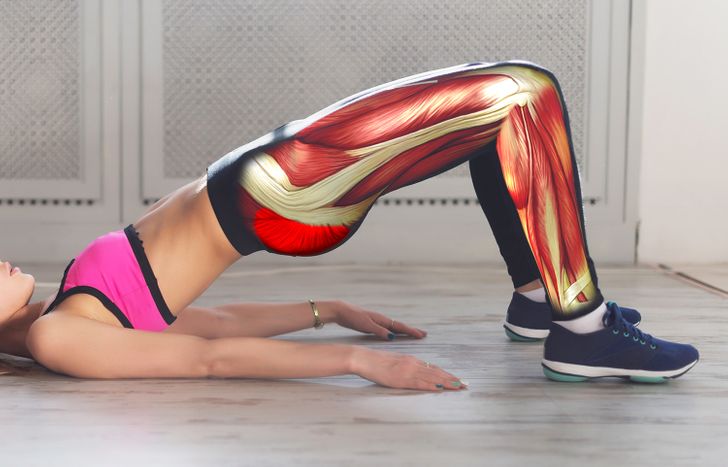
1. Hip raise

How to do it: Just lie down on the floor or on your yoga mat, with your knees bent and with your arms at your side. Now raise your hips so that your body forms a right-angle from your shoulders and knees to your feet. Pause in this position for 10 seconds to get those calories burning and then return back to the starting position. Do 2 sets of 10 reps for this one.
What it works on: This is a single move that will work on your abs, glutes, and hamstrings. If you’ve never done this move before, it’s time to start now since it strengthens the entire lower body.

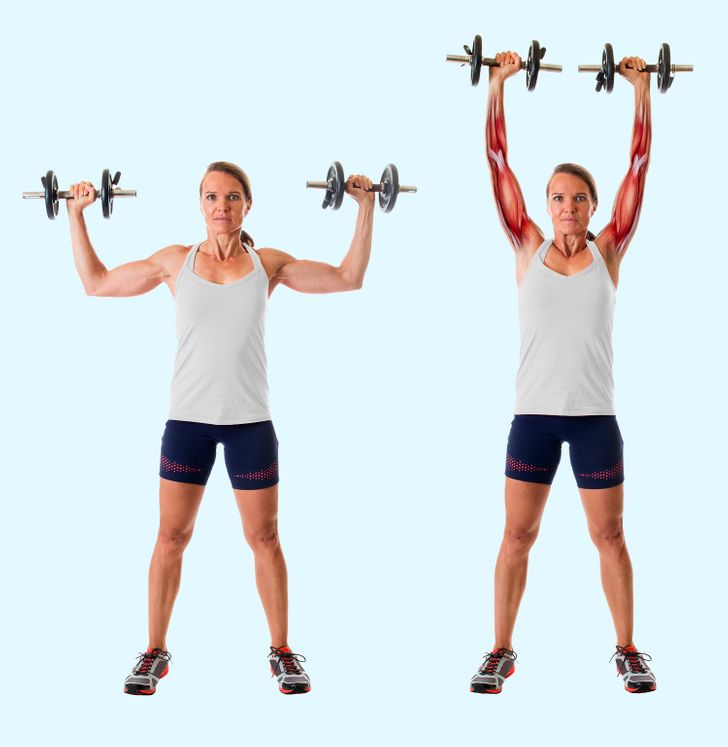
2. Overhead dumbbell press

ADVERTISEMENT
ADVERTISEMENT
How to do it: To do this move, stand straight and hold your weights in each arm. Go easy, don’t choose weights that are too heavy for you to work with. Now, slowly raise your arms until your arms are fully extended over your head. Hold this pose for 10 seconds and then lower your arms back until your triceps are parallel to the ground. Do 2 sets of 12 reps each.
What it works on: Instead of focusing your energy on an exercise that uses only one group of muscles, you can use the same energy to work several groups of muscles at once. These overhead dumbbell presses work on your shoulders, arms, back, and core — phew!

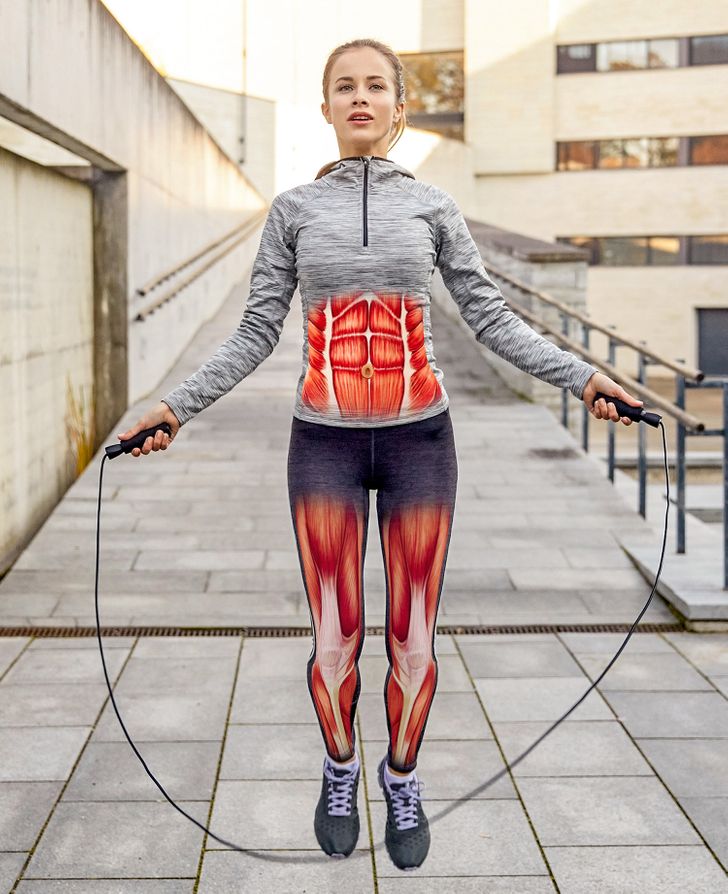
3. Jump rope

How to do it: To jump rope correctly, you need to hold the handles correctly and keep your elbows close to your sides. Now make small circles with your wrists while turning the rope. Keep your torso relaxed and look straight ahead for balance. While jumping, only jump high enough to clear the rope. It is important to not compromise good form for speed in this exercise. Do 2 sets of 10 reps each.
What it works on: This move activates more muscles in the body than any other exercise. It will leave you with more energy and a toned frame.
ADVERTISEMENT
ADVERTISEMENT

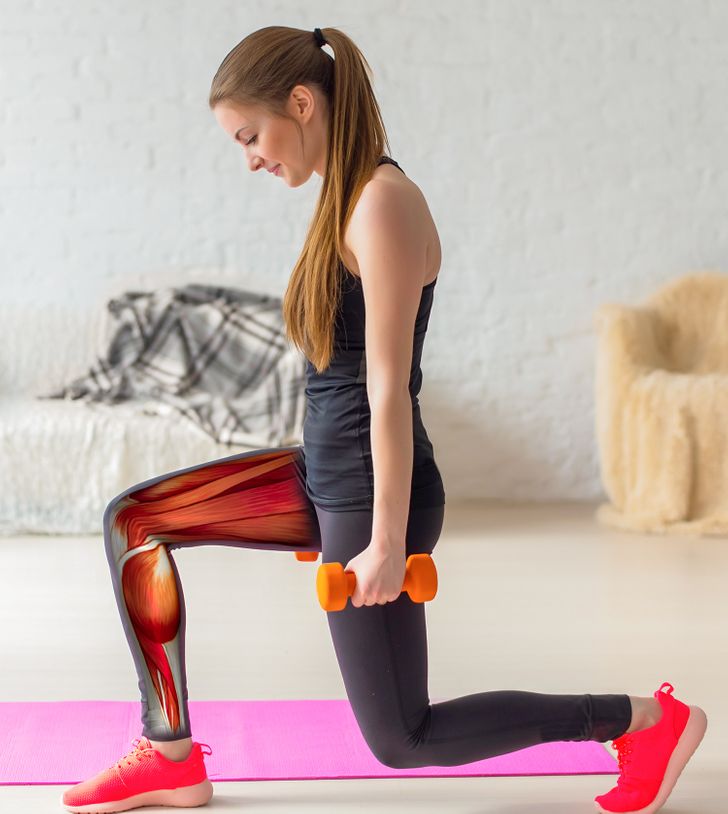
4. Lunges

How to do it: This move is a little easier than a plank or a squat because it is very close to walking, but with more effort. A lunge is the move someone does when bending down to tie a shoelace or even to propose to someone. You’ll need to keep your feet hip-width apart, then put one leg forward, and lower the body until the knee is parallel to the ground, while shifting the weight forward on the heel. Repeat with the other leg. You can do this move with weights after you become more familiar with it. You can also try side lunges by following the same step, but sideways. Do 2 sets of 10 reps each.
What it works on: If you want to work on your lower body, the best move to tone those solid thigh muscles is the forward lunge — it works on the glutes, thighs, quads, hamstrings, and core.

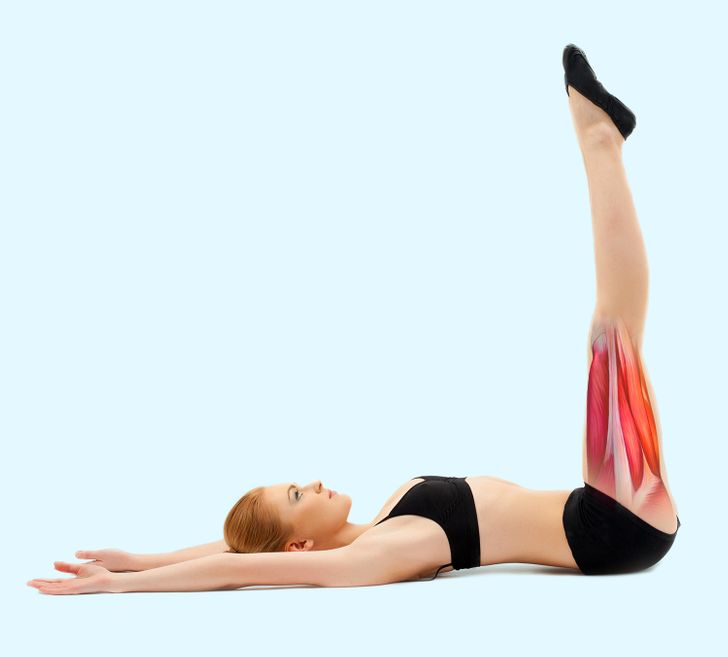
5. Lying leg raise

How to do it: Lie down flat on the ground with your hands placed palm down under your glutes. Now raise your legs perpendicular to the ground and then lower them back, but do it without letting your heels touch the ground. Start off with one set of 12 reps and gradually increase the number of reps as your body becomes stronger.
What it works on: The lying leg raise is one of the most effective exercises for abs. It’s one of the most simple, yet transformative moves that you can do.

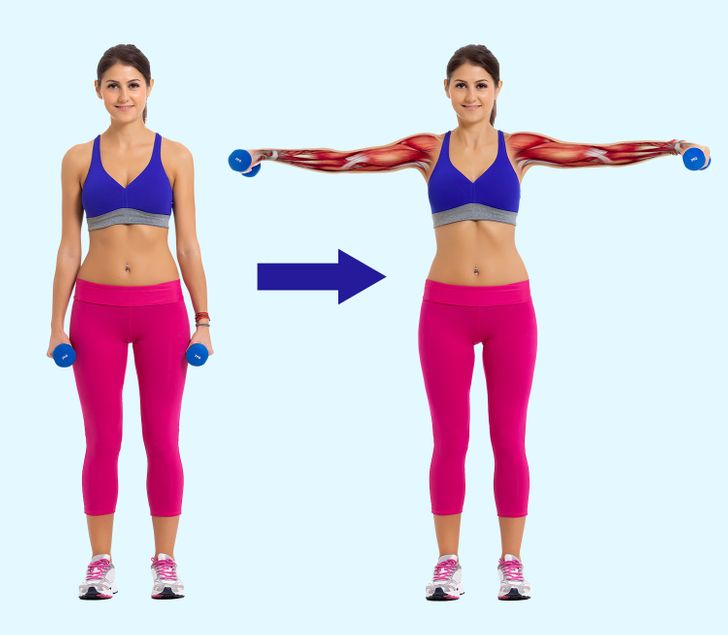
6. Dumbbell lateral raise

How to do it: Stand tall with your chest muscles engaged, your shoulders pushed back, and your palms facing each other. Now slowly lift your hands out to your sides until they reach your shoulders and then bring them back to the starting position. You can start off this exercise with about 10 reps and then increase the number gradually.
What it works on: This move strengthens your upper body, it is also the best exercise for toning your upper arms and back muscles.
What other power moves do you do to stay in shape? We would love to hear from you.
Preview photo credit depositphotos, depositphotos

Wednesday, August 5, 2020

A Guide to Basic Home Workout Equipment – And Where to Find Them

Website content extracted from: https://www.shape.com.sg/fitness/home-workout-equipment/?fbclid=IwAR2DqTo_G_8gtNmwvrzvA09fgzdczadunk9cPV0G7W3WiRCabahR9Ke9czE

If you’re looking to add equipment to your home workouts, here’s the lowdown.

home workout equipment
Photo: 123rf.com
Now that heading to the gym is no longer a viable option, home workouts are our best bet. It may take some getting use to, since working out at home means space restrictions, but home workouts can be as effective as our gym sessions. There is a wide range of no-equipment bodyweight exercises that can be done from the comfort of our homes, which efficiently tone and strengthen our muscles. 
However, if you miss the equipment at the gym a tad too much, basic workout equipment can reconnect you with some familiar workouts. Before diving head first into a gym equipment shopping spree, consider the types of exercises you plan to do, and if you have enough storage space. If there is a specific part of your body you would like to work on during this circuit breaker period, narrow down what equipment is most helpful for your training. 

Yoga mat

home workout equipment
Photo: Pixabay
This is the perfect base for all home workouts, literally. Yoga mats give you better grip and support when working out. They come in different thicknesses, depending on the amount of cushion and support you require. If your practice usually includes gentle or restorative yoga flows that require you to hold poses for longer, a thicker mat will better protect your joints and give you extra comfort. If you’re more into dynamic or power yoga, a thinner mat will give you a deeper connection to the ground, for better stability and grip. Other than yoga flows, the mats can be used for better grip and support for any other kind of workout routines including HIIT or resistance training. This is especially helpful when doing bodyweight exercises such as planks or glute bridges, or floor-based exercises like crunches or leg raises.
Where to find yoga mats: Manduka, Lululemon and Decathlon offer a variety of mats that suit different needs. 

Yoga blocks

home workout equipment
Photo: 123rf.com
There are countless ways yoga blocks can help you get a deeper stretch and provide support for better alignment of poses.
Ways to use yoga blocks: For starters, if you frequently suffer from a stiff neck, take the usual savasana up a notch by placing the edge of a block under your neck to release any tension. To give your hips a deeper stretch, lie flat and place the block under your hips. Bend one knee and bring it as close to your chest as possible. Hold before changing sides. Yoga blocks also act as an extension of your arms if your muscles are too tight for practising specific poses. This includes poses such as the forward fold (to make sure your back stays straight), half moon (for better balance), and camel. 
home workout equipment
Half moon pose using a yoga block. Photo: 123rf.com
If you’re trying to master more advance poses, a yoga block could come in handy too, such as the crow pose. Place your forehead on the block and slowly bring both legs up while finding your balance.
Where to find yoga blocks: Yoga blocks can be found at online stores such as Decathlon, Lululemon or Touch The Toes. Alternatively, yoga blocks can be substituted with thick books or sturdy boxes.

Dumbbells

home workout equipment
Photo: Pixabay
Dumbbells add an extra burn to your workout routine and build muscles effectively. The most important factor in choosing the weight is what feels comfortable for you: substantial enough for you to feel the burn during the exercises you want to do, yet still ensuring you’ll be able to complete the sets with the correct form. Dumbbells are especially great for working your arms and back, in exercises like bicep curls, lateral raises and shoulder presses. (Kayla Itsines’ Beginner Dumbbell Workout is great for getting started.)
Dumbbell exercises to try: If you often find yourself hunching by your desk, counter this posture with bent-over rows. Grab one dumbbell in each hand and stand with your feet shoulder-width apart. Lean forward and bend your knees slightly while making sure your back stays straight. To do a bent-over row: Straighten your arms in front of you and pull back till the dumbbells are next to your chest, making sure your elbows are facing upwards. If you find your form giving way, start with one arm first, alternating sides.
home workout equipment
Plank row with dumbbells. Photo: 123rf.com
To work your core more, try doing a plank row: Alternate your arms in the same motion while holding a plank.
Dumbbells are a great addition to your glute exercises as well, such as the glute bridge and lunges.
Where to find dumbbells: Decathlon, Homegym.sg and Movement First offer dumbbells of different weights. 

Resistance band

home workout equipment
Photo: 123rf.com
Resistance bands don’t take up much space at home and can be used for a variety of exercises. There are a variety of resistance bands available. This includes those with handles, loop bands, mini loop bands, and the flat ribbon ones. The flat ribbon resistance bands are the most versatile, since they can be tied together to form a loop when needed, and the length can be easily adjusted by tying as well. The band gives your workout extra “resistance” such that your muscles will have to work extra hard and you’ll definitely be feeling the burn after. Resistance bands can be used to work your entire body, and is especially helpful when working your arms and legs.
Resistance band exercises to try: To work your arms, stand with your arms stretched out in front of you, holding the band shoulder-width apart and ensure your palms are facing down. Pull the band outwards and slowly retract back. This is one rep. This motion can be repeated with your palms facing up and your elbows by your waist as well. To work your glutes and thighs, stand with your feet shoulder-width apart and tie the resistance band just above your knees, tight enough so that it will not fall off. Proceed to do your regular squats but be ready to feel an extra burn.
home workout equipment
Side leg lift with resistance band. Photo: 123rf.com
Another simple exercise to try out is side leg lifts. Lie on your side and tie the resistance band just above your ankle. Raise your top leg as high as possible without your back arching, and return to the starting position. Repeat on the other side. 
There are also plenty of resistance band exercises that effectively target your inner thighs and butt.
Where to find resistance bands: Resistance bands can be found at Decathlon and Movement First. 

Jump rope

home workout equipment
Photo: Pixabay
An activity we’re all probably familiar with from our childhood, jumping rope is a straightforward form of cardio that can be done without leaving the house. While burning calories, it helps improve your coordination skills and boasts numerous other benefits as well. In fact, it has been proven to be more effective than jogging.
Skipping exercises to try: Train your stamina with interval skipping. Skip continuously for a minute, followed by a 30-second break; repeat this for a few rounds. Try moving between double leg jumps, single leg jumps, and alternate leg jumps. Jump rope can also be added to your HIIT routine, to keep your heart rate up and burn some extra calories. If you’re up for a challenge, you can even attempt to master double jumps or the criss cross. Opt for a weighted rope or add weights to your jump rope to incorporate some upper body strength training.
Where to find jump ropes: A variety of jump ropes can be found at Decathlon.  

Medicine ball

home workout equipment
Photo: 123rf.com
For strength training, the medicine ball is a useful equipment to have. It is available in a range of weights, so choose one that is heavy enough for you to feel your muscles working, but not too heavy that it disrupts your flow of movement when working out.
Medicine ball exercises to try: The simplest exercise that can be done with a medicine ball is the overhead slam – though you might want to avoid this if you have neighbours downstairs. Stand with your feet shoulder-width apart and bring the ball above your head using both hands. Slam the ball onto the ground in front of you, slightly hinging forward at your hips. This is one rep. The medicine ball can also be added to the usual exercises to further work your muscles. Instead of the usual crunches or sit-ups, hold a medicine ball in front of your chest and use your core to lift yourself up as usual.
home workout equipment
Sit-up with medicine ball. Photo: 123rf.com
To level up your squats, hold a medicine ball just in front of your chest and lift one leg forward. Lower into your squat position on one leg, and stand back on both feet before changing sides. To work your back, arms and shoulders more, take your usual superman exercise up a notch by holding a medicine ball in your hands before lifting up.
Where to find medicine balls: Medicine balls of different weights are available at Decathlon and Movement First.

Tea for fresh breath

Website: 1 尧妈汤厨发布了一篇小红书笔记,快来看吧! 😆 4zUicIOeSVfYiUW 😆 http://xhslink.com/uhQqLj,复制本条信息,打开【小红书】App查看精彩内容! Tea Ingredients: 竹蔗 Dried Sugar Can...